Lighting
Warm or cool light: which should you choose for your desk?
There is no universally correct answer to warm versus cool light. Brightness, direction and the rest of the room matter alongside colour temperature.
Türkçe oku ↗
Do not confuse kelvin with brightness. Compare paper, screen reflections and the surrounding room when choosing a warm or neutral tone.
What kelvin tells you—and what it does not
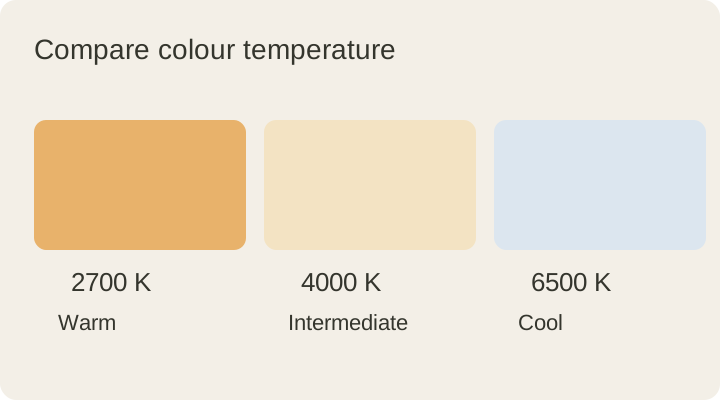
Kelvin expresses the colour temperature of white light: lower values appear warmer and more yellow, while higher values appear cooler. It is not the surface temperature of the lamp and does not tell you how much light it produces. A 4000K lamp is not necessarily brighter than a 3000K lamp.
For example, Philips describes 2700K as warm, 4000K as neutral and 6500K as cool white in its colour temperature explanation. Marketing names such as daylight can vary, so compare the actual kelvin values.
Compare tones in the context of your room
| Example value | Appearance | Situation to consider |
|---|---|---|
| 2700–3000K | Warm white | A room that also serves as an evening living space |
| Around 4000K | Neutral white | A desk used for both paper and screen work |
| Around 6500K | Cooler white | A space where you prefer this tone and have checked it against the room |
This is not a ranking of health or productivity benefits. Cooler light does not guarantee better concentration, and warmer light does not guarantee less discomfort. Choose according to the room and your preferences. Persistent visual discomfort deserves appropriate professional advice rather than repeated lamp purchases.
Why the surrounding light changes the result
A very warm ceiling light next to a very cool desk lamp can make the desk look like a separate patch of colour. Likewise, a brighter lamp alone may not balance a dark room where the screen is the main light source. First identify the existing lights and daylight entering through the windows.
Your desk surface also affects the scene. Glossy finishes can create strong reflections, while matte surfaces may look calmer under the same light. Judge the lamp alongside your actual desk and walls. A phone camera's automatic white balance can also change the tone shown in a photograph.
Try a simple comparison at home
- Place white paper, a book and your everyday screen on the desk.
- Keep the lamp head in the same position; change only the colour temperature first.
- Where possible, compare at similar apparent brightness levels.
- Look for lamp or window reflections in the screen.
- Repeat the comparison in the evening as well as in daylight.
Ask whether you can comfortably move between notebook and screen, as well as which tone looks attractive. Adjustable colour temperature may help if your preference changes during the day. On a fixed-tone lamp, brightness adjustment and head movement remain useful features.
Check placement before choosing a different tone
If your hand casts a shadow across the page, try changing the lamp's position before blaming its colour temperature. If the lamp appears as a bright spot in the screen, change its angle or relationship to the display. These are placement problems that a different kelvin number may not solve.
Make one adjustment at a time and write down what improved. This produces a clearer decision than changing the lamp, desk and screen settings together. For a broader buying checklist, continue with the desk lamp guide; for room planning, see the home workspace guide.
This guide was prepared for DESKIND with AI assistance. Refer to the linked sources and your device manufacturer’s current instructions for technical details. Adapt layout suggestions to your own space.
Have a correction or question? Contact us.