Lighting
How to choose a desk lamp: light, size and everyday use
A beautiful desk lamp is only useful if it puts light where you need it. Start with what you do at your desk, rather than the wattage or a product photograph.
Türkçe oku ↗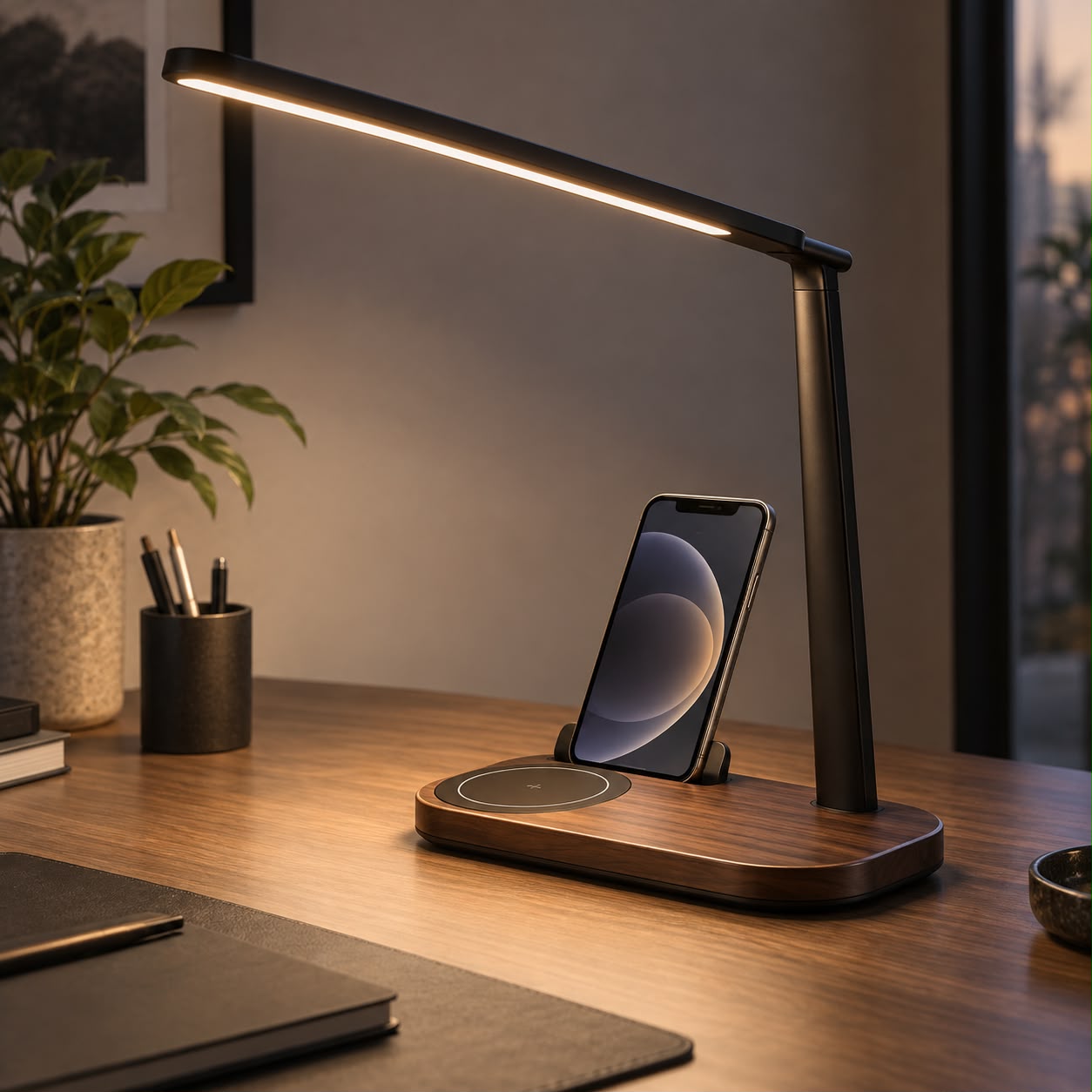
Identify the surface you need to illuminate. Then compare light output, colour temperature, adjustment and the space the lamp occupies.
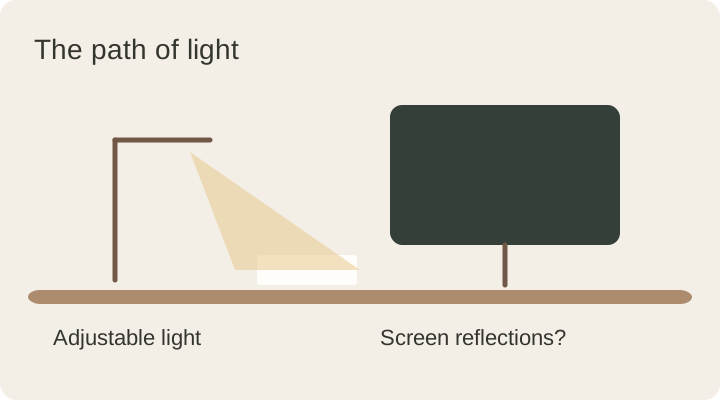
1. Describe the work you do at your desk
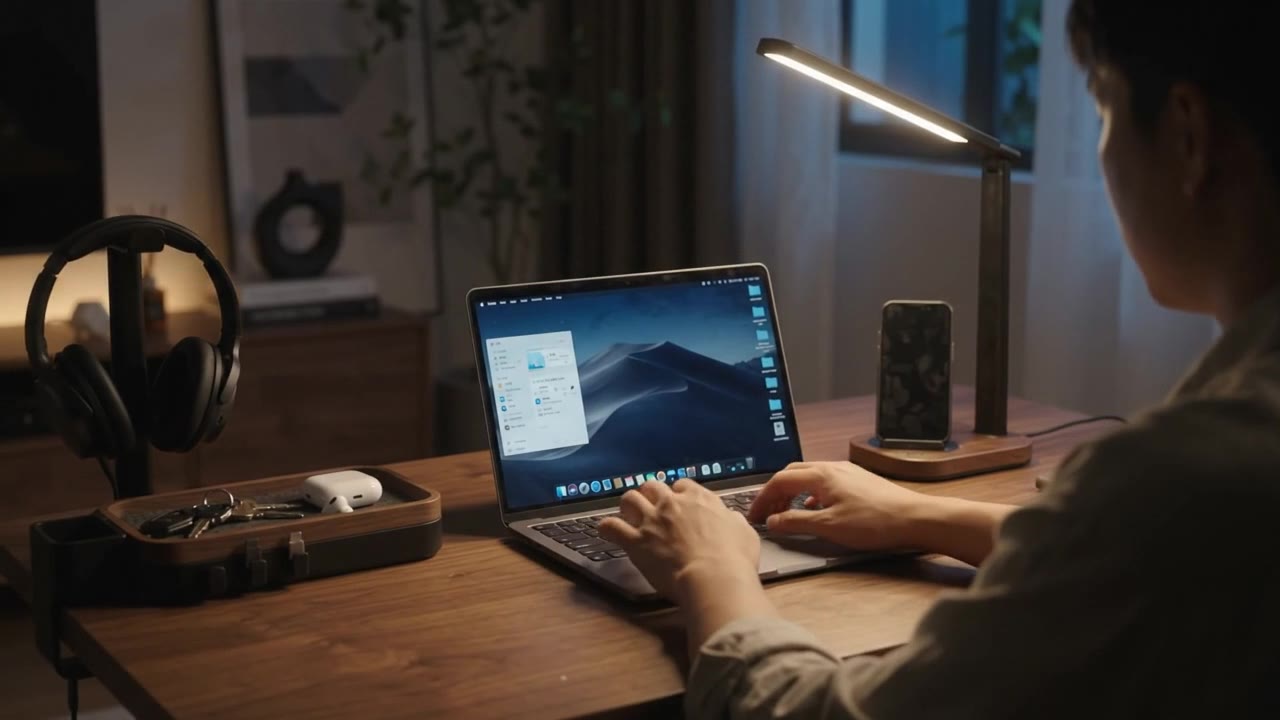
Working on a computer, writing in a notebook and handling small components do not create identical lighting needs. A screen produces its own light; paper relies on the light falling onto it. If you mostly use a computer, pay attention to reflections. If you write by hand, the lamp needs to reach the writing area.
Before shopping, sketch your desk. Place the screen, keyboard and an open notebook on the plan, then mark the space available for a lamp. Measurements of the base and required reach are more useful than a vague search for a large desk lamp. Adjustment can be particularly helpful when several people share the desk.
2. Watts, lumens and kelvin answer different questions
Watts describe electrical power consumption, lumens describe light output, and kelvin describes colour temperature. Two lamps with the same wattage need not produce the same amount of light. The US Department of Energy explains these distinctions in its lighting label guide.
| Information | Question it answers |
|---|---|
| Lumens | How much light does the source produce? |
| Kelvin | Does the light look warm, neutral or cooler? |
| Dimensions and movement | Can I position the light where it is needed? |
| Brightness adjustment | Can I adapt it for daytime and evening use? |
There is no single lumen figure that suits every desk. Distance, beam distribution and the room's existing light all matter. If a listing only gives watts, ask for the other information before deciding.
3. Aim the light at your work, not your screen
After positioning the lamp, return to your normal sitting position. Can you see its bright surface directly? Is there a conspicuous reflection on the screen? A small adjustment may help more than buying a more powerful lamp. CCOHS discusses illuminating documents and controlling screen reflections.
Watch the shadow made by your hand while writing. Trying the lamp on the left if you are right-handed, or on the right if you are left-handed, is a practical starting point. Make the final decision by observing the actual shadow. Check that both sides of an open notebook are usable.
4. Measure movement as well as the base
A base that looks small in a photograph may occupy your mouse space. Draw the product's footprint on paper and place it on the desk. Consider whether a moving arm will hit the monitor, wall or shelf. For folding models, distinguish the stored dimensions from the dimensions in use.
Desk thickness is not the only consideration for a clamp-mounted lamp. A frame, drawer or sloping edge underneath may prevent installation. Check the manufacturer's surface and mounting requirements, and allow the power cable to move without restricting the arm.
5. Ask these questions before buying
- Do the specifications suit my daily work?
- Can I adjust brightness and light direction as needed?
- Do the base and arm fit the available space?
- Is the adapter included, and are its requirements clear?
- Can I find the care, warranty and returns information?
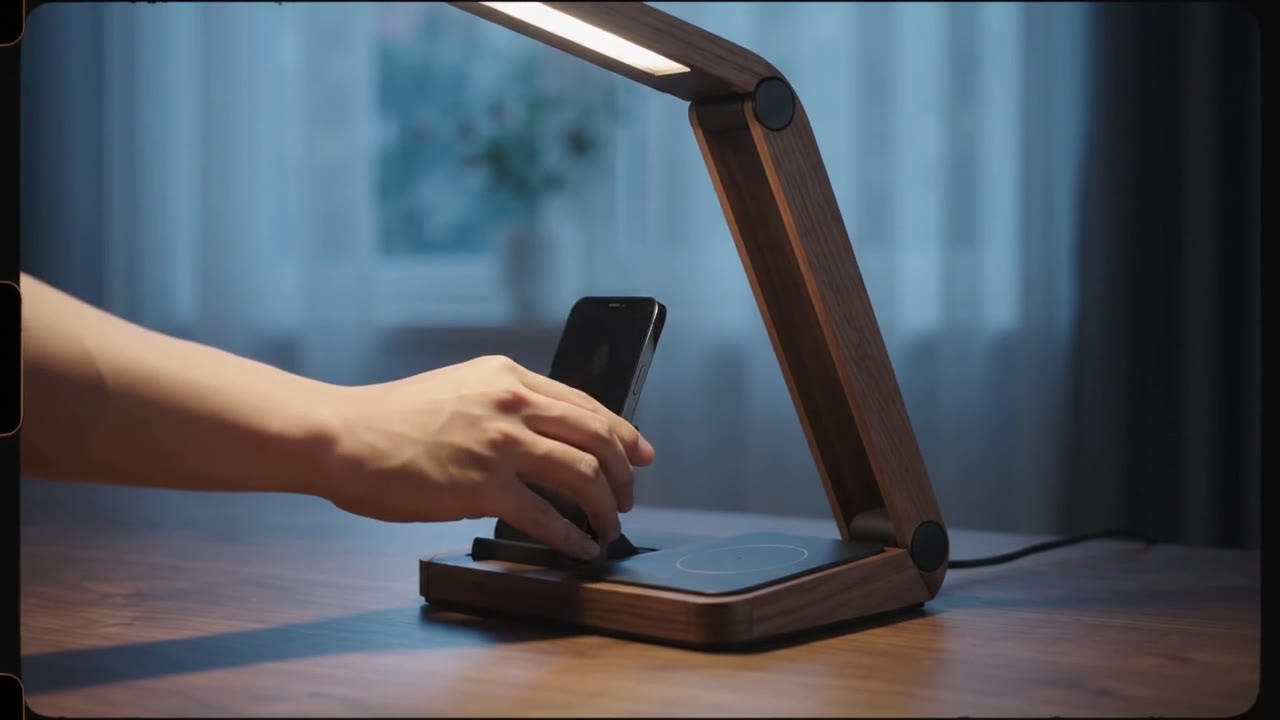
Evaluate each feature of a multifunctional product separately. An integrated wireless charger does not automatically mean that your particular phone is compatible. Check charging compatibility after establishing that the lamp meets your lighting needs.
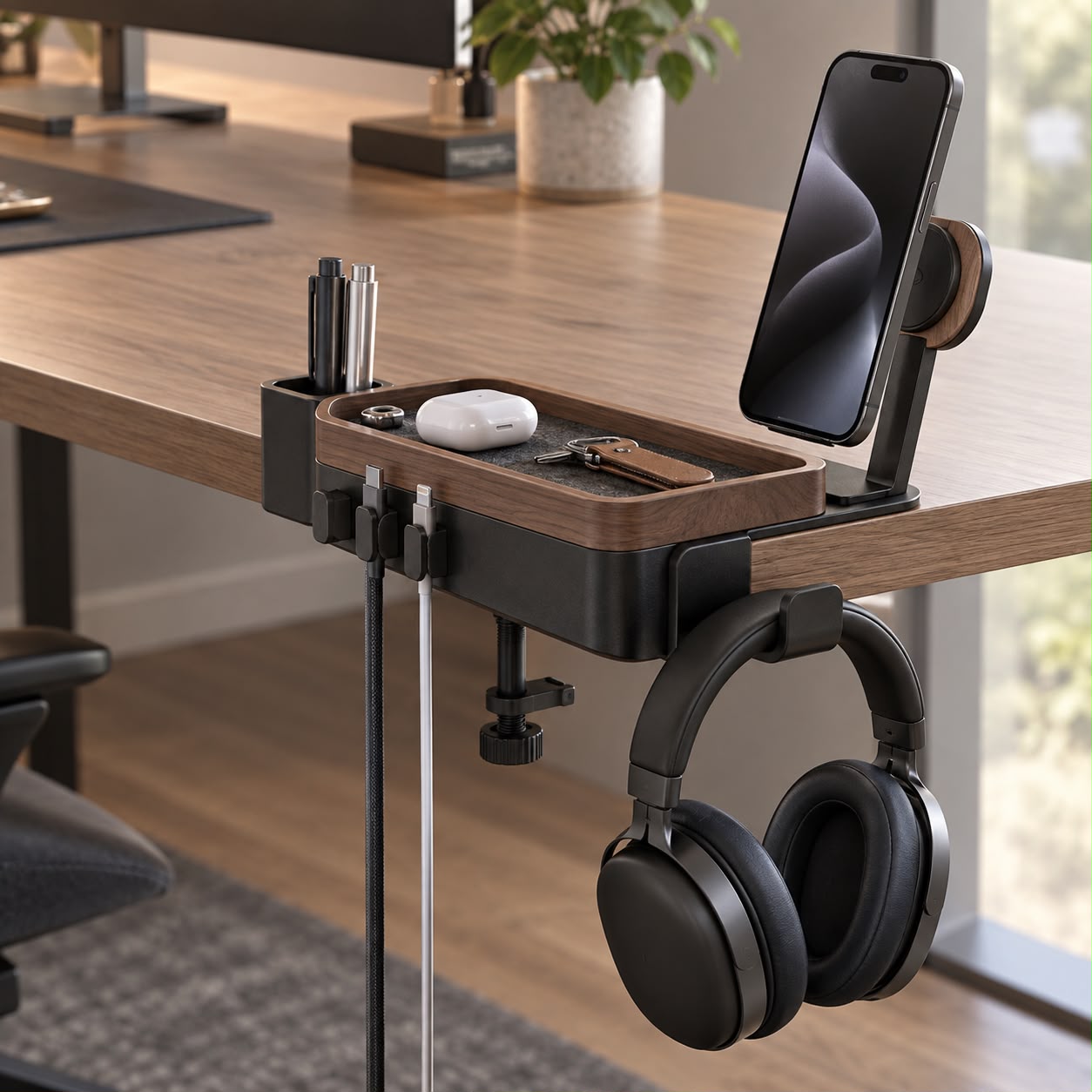
You can compare the design and listed specifications of Arc and Halo. Refer to the product page for current availability and specifications; this guide is not a performance test of a particular model.
This guide was prepared for DESKIND with AI assistance. Refer to the linked sources and your device manufacturer’s current instructions for technical details. Adapt layout suggestions to your own space.
Have a correction or question? Contact us.