Materials & care
How to clean walnut desk accessories
The most important care question is not simply which wood you own, but how its surface is finished. A treatment suitable for oiled wood may leave marks on a different finish.
Türkçe oku ↗
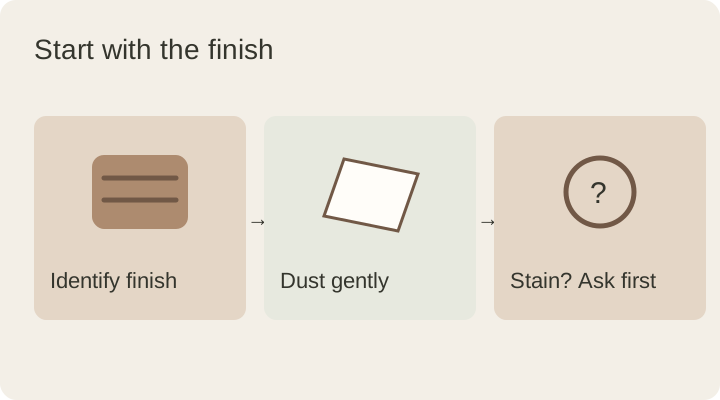
Find the manufacturer’s finish and care instructions first. Start with a soft clean cloth for dust; do not apply oil, polish, solvents or sandpaper to an unidentified finish.
Wood species and surface finish are different details
“Walnut” does not specify a cleaning method. Solid wood, walnut veneer and a walnut-effect surface are different materials. Even genuine walnut may have different finishes, which affect the choice of cleaner. Look for material and surface treatment separately in the product information.
If the information is missing, ask whether the surface is oiled or lacquered and which products are suitable. A dramatic result in a video does not establish compatibility. With electronic accessories, also follow the instructions for charging surfaces, connectors and metal parts.
Start gently with everyday cleaning
Disconnect powered accessories and allow them to cool as instructed before cleaning. Remove dust gently with a soft, clean cloth. Grit or dried residue in a cloth can scratch a surface, so keep the cloth separate from dirtier cleaning jobs.
Only use a damp cloth or cleaner if the relevant care instructions permit it. Do not spray liquid directly onto the accessory or let it enter openings. For DESKIND, begin with the care information and check it against the particular model.
Respond carefully to spills
For powered equipment, address electrical safety first: disconnect the supply safely without touching wet connections. Blot accessible liquid without spreading it. Check joints, the base and felt surfaces for trapped moisture. If liquid enters electronics, seek manufacturer support rather than restarting the device because it appears to work.
Follow the product instructions instead of applying rapid heat with a hairdryer or rubbing hard. If a mark remains, send the manufacturer a photograph before layering different chemicals onto it.
Does every walnut product need oil?
No. The wood species alone does not establish whether oil is appropriate. Some finishes use specific care systems and others require different treatment. For example, Herman Miller’s guidance for its own wood and veneer products excludes certain polishes. Treat this as evidence that care depends on the finish, not as instructions for every brand.
Avoid cooking oils, random furniture polishes and homemade mixtures. If a care product is recommended, confirm the amount, compatible surfaces and drying conditions. More shine does not necessarily mean a better result.
Prevent marks before treating them
| Source | Useful habit |
|---|---|
| Cups | Use a suitable coaster and remove moisture promptly |
| Keys and metal items | Use an appropriate tray or protective surface |
| Plant pots | Keep leaks away from wood |
| Strong sunlight or heat | Follow placement instructions |
| Adhesive accessories | Check finish compatibility before applying |
A protective pad must itself be compatible: material that transfers colour or sticks can leave a new mark. Occasionally lift accessories to check for moisture or debris underneath.
Know when to stop
Natural grain and colour vary between pieces. A pattern differing from a photograph is not automatically a defect. However, do not sand or chemically treat a new deep scratch, crack or raised area without knowing the construction; thin veneers are especially vulnerable.
For support, provide an overall photograph, a close view in daylight, the product name and details of previous treatments. Good care means understanding the material and intervening only as needed.
This guide was prepared for DESKIND with AI assistance. Refer to the linked sources and your device manufacturer’s current instructions for technical details. Adapt layout suggestions to your own space.
Have a correction or question? Contact us.