Materials & care
Solid walnut or veneer? Understanding wood materials
“Walnut” can describe a timber species, a thin surface layer or just a colour. A useful comparison begins with how the object is actually made.
Türkçe oku ↗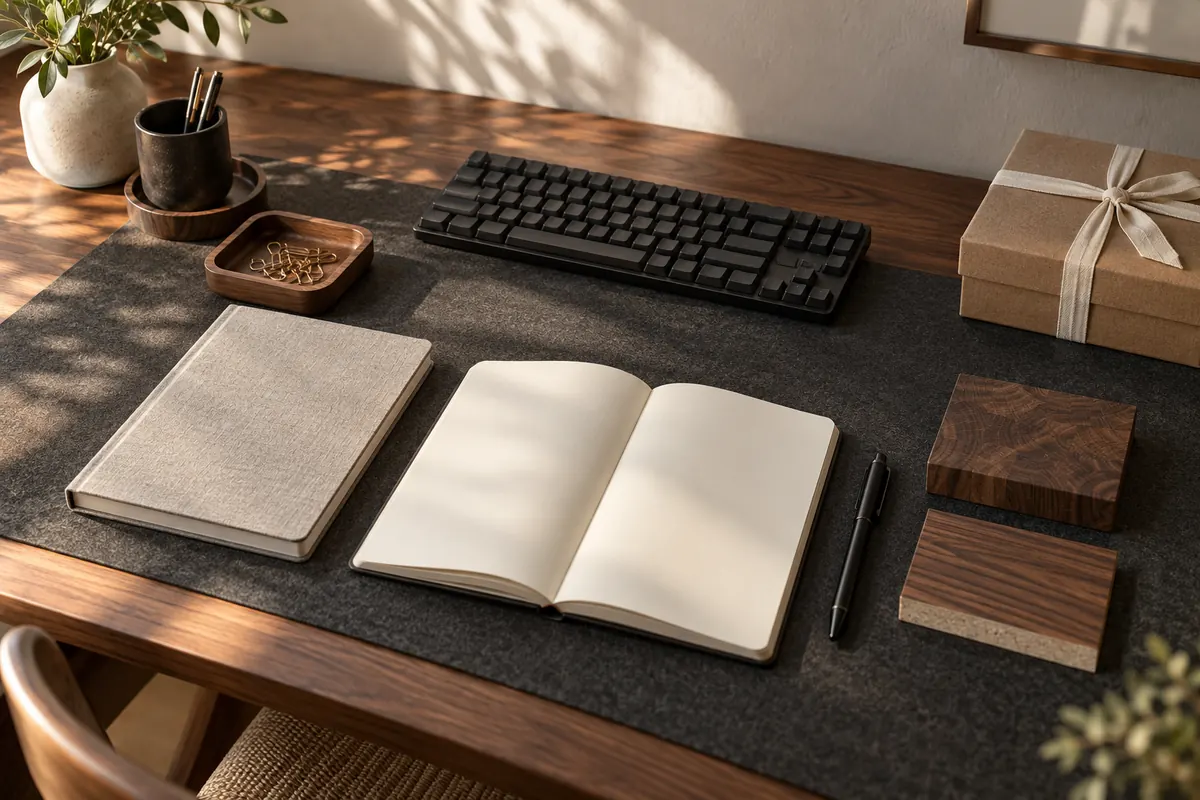
The AI-generated cover illustrates a workspace; it is not a photograph of a product for sale.
Solid wood, natural veneer and printed wood-look finishes are different constructions. Assess the substrate, joints, finish and care requirements rather than ranking quality by one material name.
Three descriptions, three constructions
| Term | What it can mean |
|---|---|
| Solid walnut | Walnut through the thickness of the wooden component; may include joined pieces |
| Natural walnut veneer | A thin layer of real walnut bonded to a substrate |
| Walnut-look or walnut colour | A visual description that does not by itself establish walnut content |
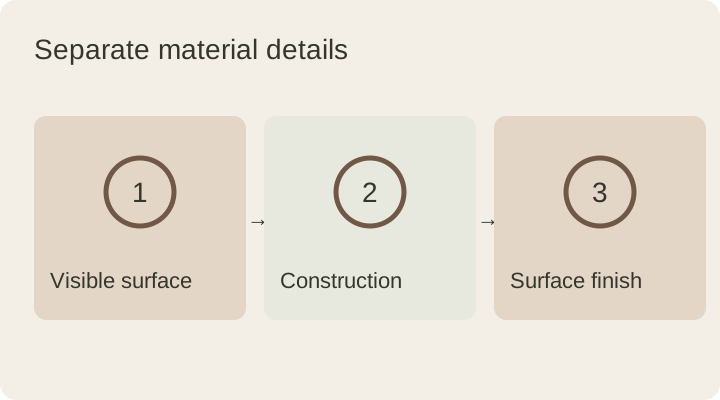
A solid component made by joining several pieces of timber is not automatically veneer. Equally, walnut used in one part of an object does not mean every component is walnut. Ask separately about the body, base and visible surfaces rather than treating a product name as a complete construction specification.
Photographs cannot settle every question
Grain patterns and edges may offer clues, but a photograph is not a material certificate. Edge banding can hide the substrate, and lighting or display settings can alter colour. Request an explicit material description and, where possible, an edge or cross-section detail.
Make the question specific: is the face natural walnut veneer, what is underneath and is veneer thickness given? For a solid-wood product, ask which components use that timber. This creates a comparison between concrete details instead of a contest between marketing terms.
Is veneer always lower quality?
No. Design, substrate, bonding and edge workmanship must be considered together. A well-made veneered surface can suit its intended use. The word solid does not itself guarantee good joints, drying or finishing.
The USDA Forest Products Laboratory Wood Handbook treats timber, panel products and finishing as distinct technical subjects. For a buyer, the useful approach is to understand construction and use rather than treating one material term as a universal quality ranking. Also consider whether the seller explains how to maintain and repair the particular product.
Care depends on more than the species
Oregon State University’s wood and moisture guide explains that dried solid wood can still change dimensions as it gains and loses moisture. Do not assume a wet surface is harmless simply because the object is solid timber. Consider liquid exposure and placement alongside the product instructions.
Oiled, lacquered and other finishes have different care requirements. Sanding a thin veneer may expose the substrate, while uncontrolled sanding or oiling can also alter a solid item’s colour. Identify the finish and ask the manufacturer before treating a stain or scratch.
A short buying checklist
- Does walnut describe the timber, the veneer or only the colour?
- Are the face material and substrate explained separately?
- Are finish and cleaning instructions available?
- Can you see the edges, joints and underside?
- Are natural variations and maintenance limits described?
Is variation in natural wood a defect? Not every colour difference is a defect. A photograph alone may also be insufficient to judge cracks, lifting veneer or workmanship. Share clear images with the seller and ask about the product’s acceptance criteria.
For cleaning, continue with walnut care. For a desk accessory, combine the material decision with the size and placement checklist.
This guide was prepared for DESKIND with AI assistance. Refer to the linked sources and your device manufacturer’s current instructions for technical details. Adapt layout suggestions to your own space.
Have a correction or question? Contact us.